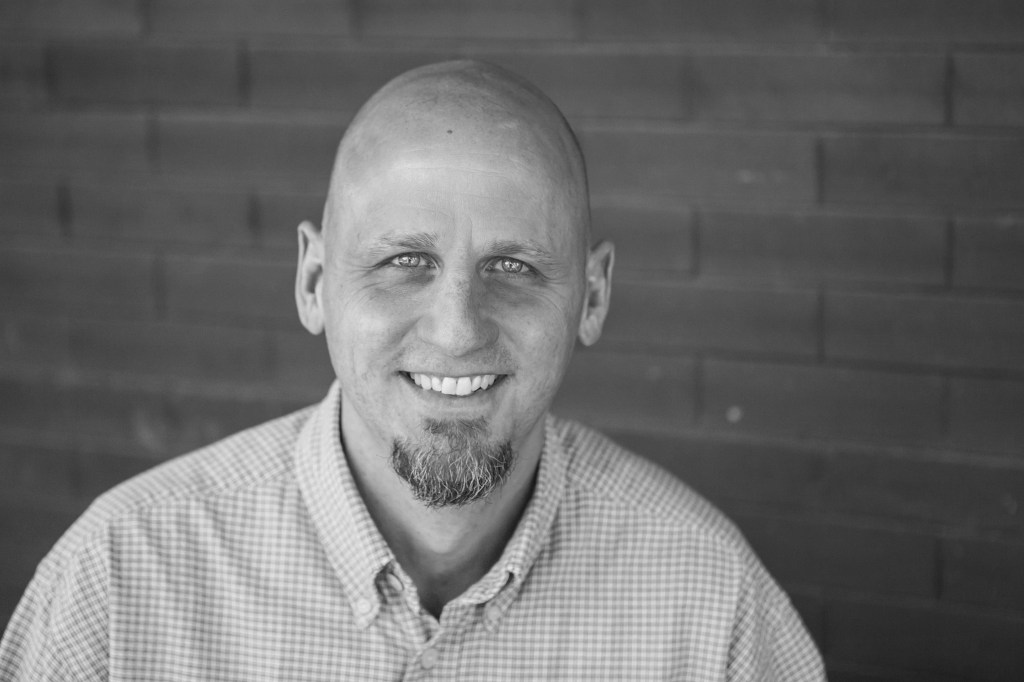
In 1997, Michael Henry co-founded Lighthouse Writers Workshop in partnership with Program Director and fiction writer Andrea Dupree. They came up with the idea of running their own creative writing workshops under the name Lighthouse while looking at an Edward Hopper painting, “Lighthouse at Two Lights.” When the organization officially became a 501c3 nonprofit organization in 2004, Michael was named Executive Director. Under their leadership, Lighthouse has developed into one of the leading literary arts organizations in the country.
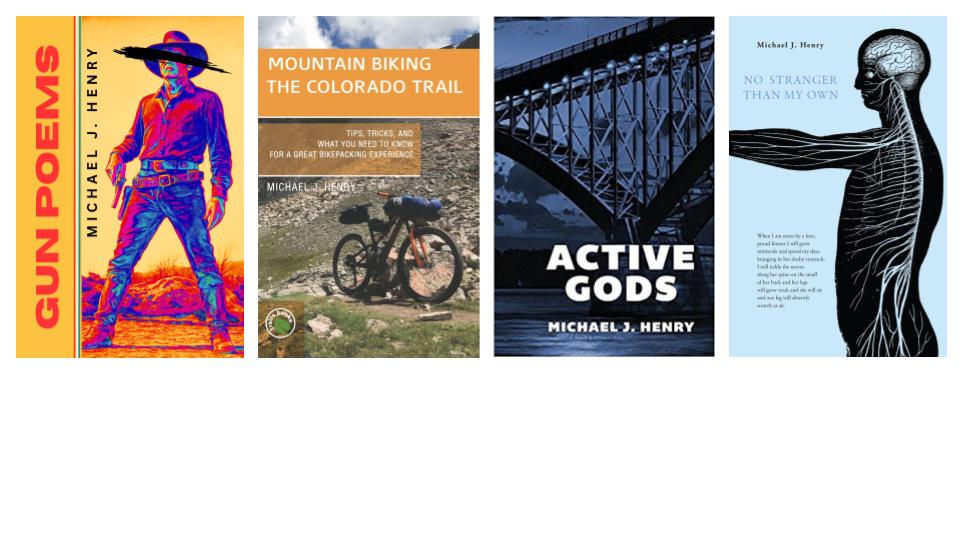
His nonfiction and poetry have appeared in numerous literary journals and magazines such as Elevation Outdoors, Ekphrastic Review, Hippocampus, Threepenny Review, Pleiades, Copper Nickel, Rio Grande Review, Georgetown Review, Mountain Gazette, The Writer, and 5280 Magazine. He’s also published two poetry collections, No Stranger Than My Own and Active Gods, and a chapbook, Intersection, as well as a nonfiction book, Mountain Biking the Colorado Trail. Working alongside Garrett Ammon, Artistic Director at Wonderbound, they created two full-length narrative ballets, Intersection and Gone West.
A new collection of poetry, Gun Poems, is forthcoming from Middle Creek Publishing in early 2026.
Michael received an MFA in creative writing from Emerson College, where he studied with Bill Knott and Gail Mazur, and an undergraduate degree in English from University of Rochester, where he studied with notable poets Jarold Ramsey and James Longenbach. At Lighthouse and elsewhere, he’s led workshops for poets and nonfiction writers as well as community-focused workshops for adults living with cancer, critical-care workers, at-risk youth, and generative workshops in museums and other art centers. In 2017 he was awarded a prestigious Livingston Fellowship from the Bonfils-Stanton Foundation, and in 2018 he received the Judy Anderson Founders Award from PlatteForum. Since 2019, he’s been a principal partner at Colorado Resiliency Arts Lab (CORAL), an NEA-funded research project that uses the practice of art as a tool for reducing medical worker burnout, anxiety, and stress.
Michael was born and raised in a working class suburb of Buffalo, New York. His father is a retired postal carrier; his mother was a medical secretary. He and his sisters were the first in their family to attend college.
 Michael J. Henry